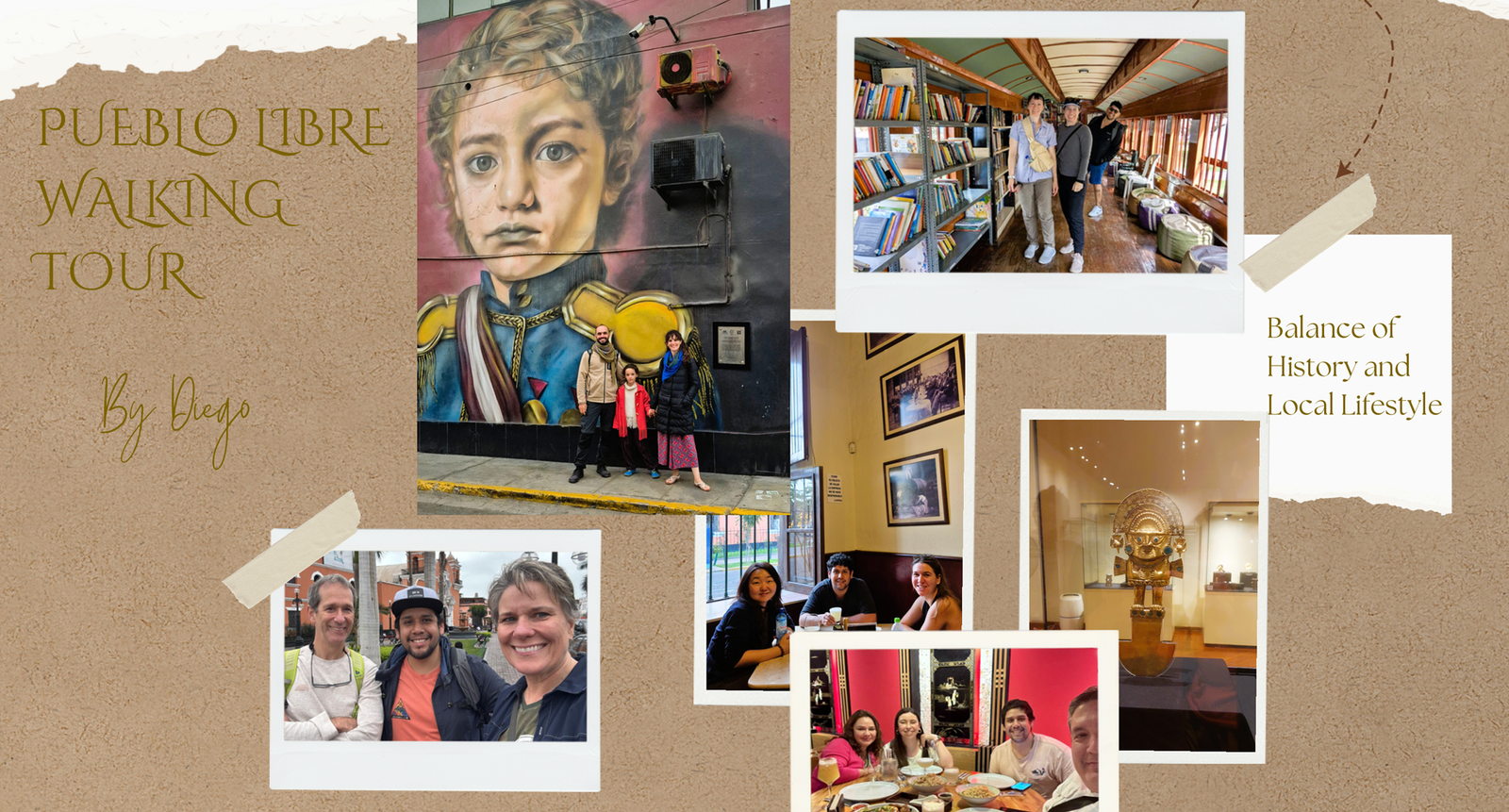
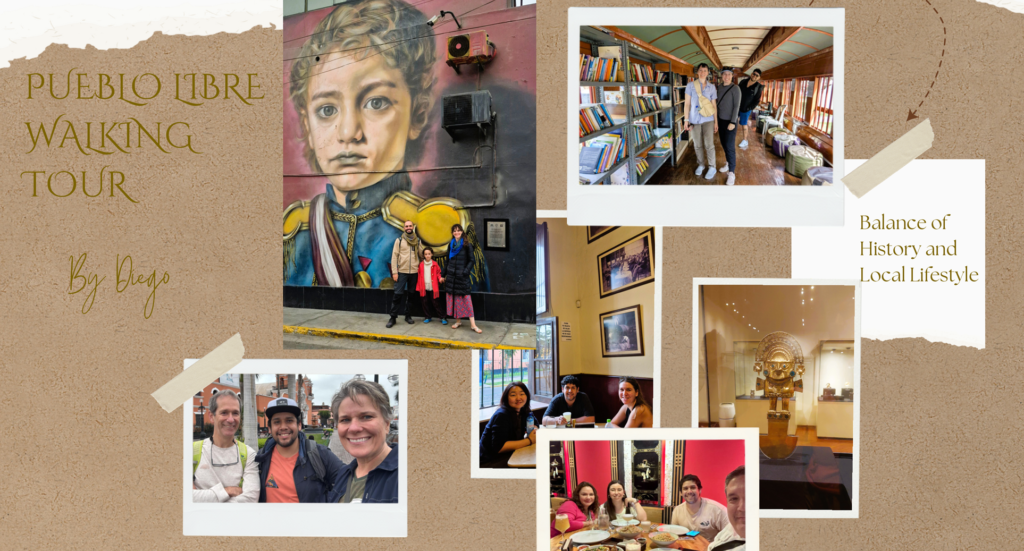
Welcome! I’m so excited to share my neighbourhood with you. While many visitors spend their time in Miraflores or Barranco, I invite you to step off the beaten path and join me for the most authentic Free Walking Tour Pueblo Libre in English.
Pueblo Libre, which translates to “Free Town,” is a place where history isn’t just in the books—it’s in the streets, the markets, and the people. As your guide, I’ve designed this route to take you through centuries of Peruvian identity. Let’s get walking!
How does this “Free” Tour work?
I believe that everyone should have access to great history and culture, regardless of their budget. That is why I lead this as a Free Walking Tour Pueblo Libre in English. There is no set price; instead, the tour is supported entirely by your voluntary contributions. At the end, if you’ve enjoyed our journey and felt you’ve learned something special, you can provide a tip that reflects what the experience was worth to you. It’s a pressure-free way to explore the city like a local!
What does the tour cover?
Here’s a list of the main attractions of the tour:
Plaza Bolivar
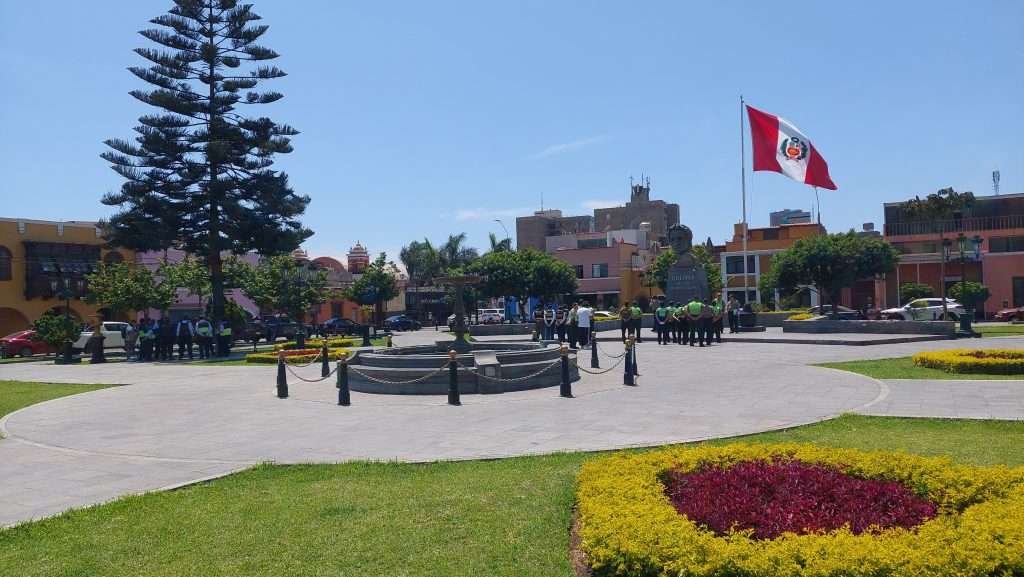
Our journey starts at the beautiful Plaza Bolivar. We gather by the bust of Simón Bolívar, one of the great liberators of the continent.
As we stand here, I’ll point out the National Museum of Archaeology, Anthropology, and History. It’s the oldest and most significant museum in Peru. We won’t go inside just yet—we’re saving that grand finale for the end—but I’ll explain why this specific square was the “headquarters” for the men who dreamt of a free Peru.
Street Art & San Martín de Porres
As we leave the plaza, we’ll dive into the colourful side streets. Pueblo Libre is full of vibrant street art that tells the story of our identity.
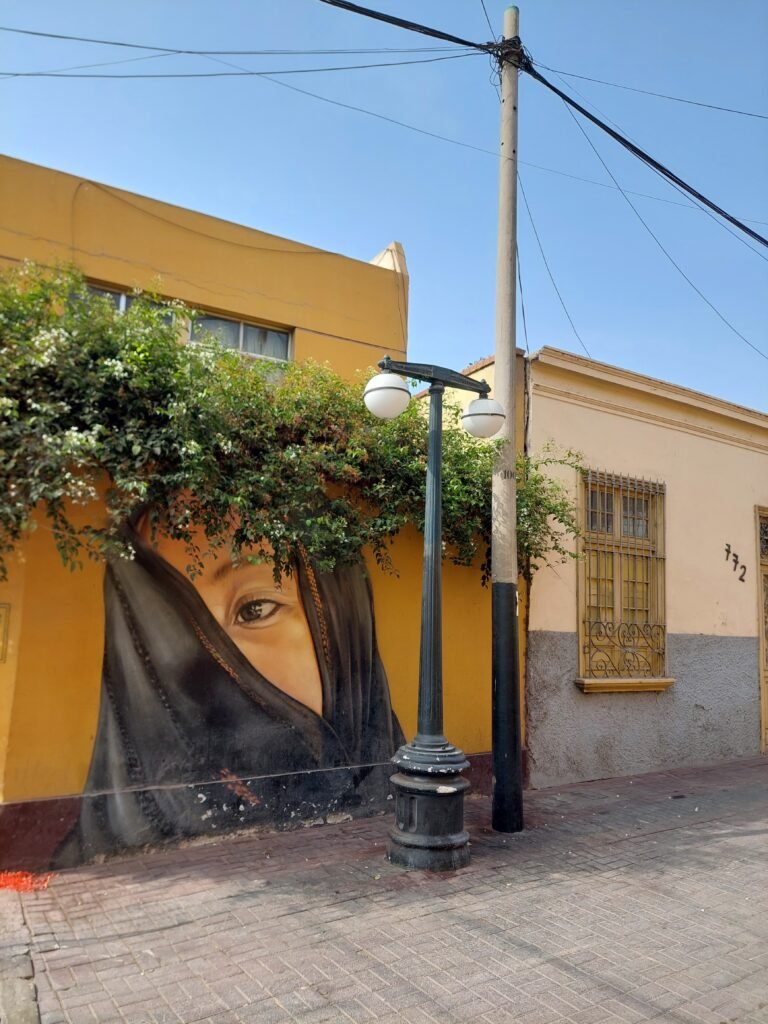
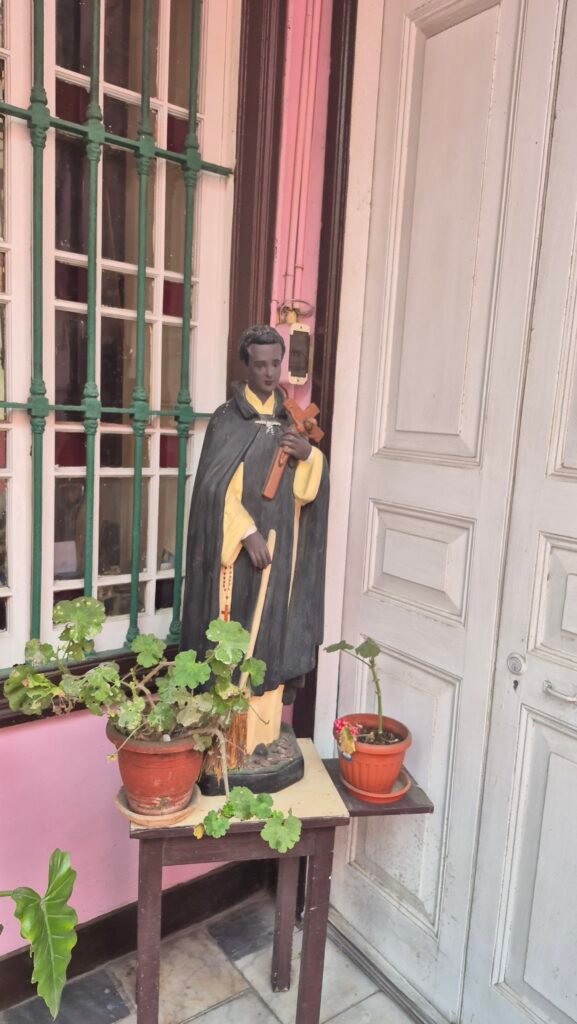
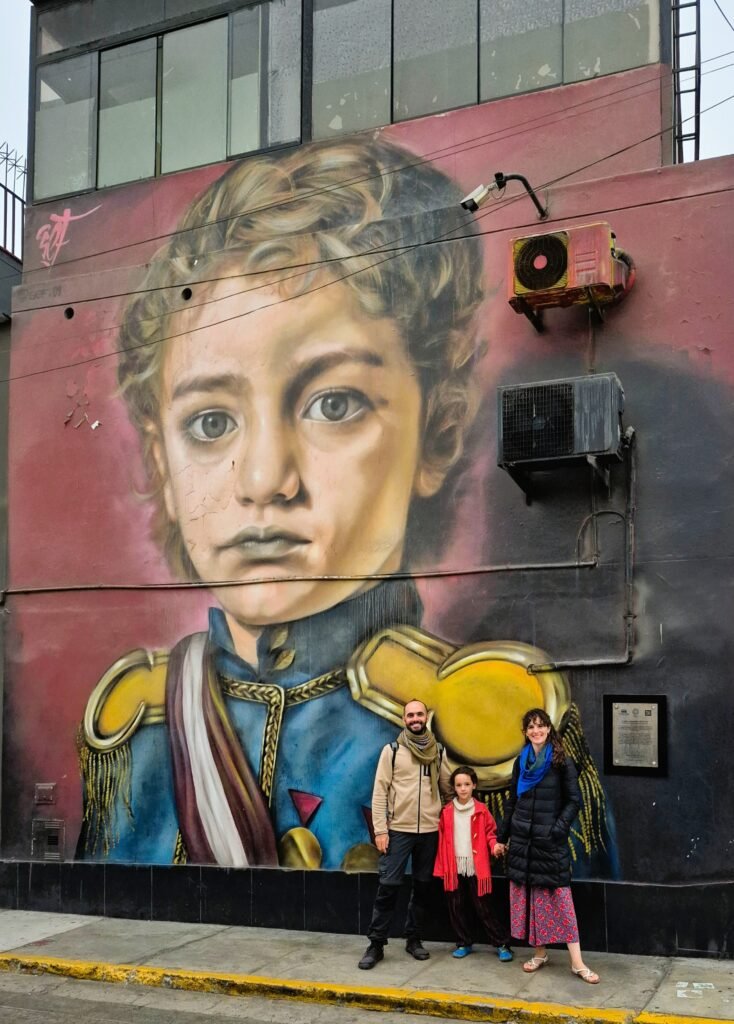
One of my favourite murals to show you is that of San Martín de Porres, a local saint and a true hero of Lima. Known as the “Saint of the Broom,” he was the first Black saint in the Americas. His story of humility and kindness is a huge part of our local culture, and seeing his image on the walls helps you understand the spirit of the people here.
The Calvary Legion & Military History
On our way to the market, we’ll pass the Calvary Legion and one of the local army bases. This area has a strong military tradition, rooted in the battles for independence. Seeing the guards and the historic barracks reminds us that Pueblo Libre was once the strategic “headquarters” for those dreaming of a free Peru.
Market Life: The Social Heart of Lima
Now, we’re entering my favourite part: the Pueblo Libre Market. In Peru, a market isn’t just a place to buy groceries; it’s a social hub.
Watch how people greet their caseros (trusted vendors). They don’t just buy fruit; they swap stories and “catch up” on neighbourhood news. It’s the community’s living room.
The Fruit Tasting
You can’t leave without a taste of Peru’s biodiversity! We’re going to sample some native fruits you won’t find back home:
- Lúcuma: Creamy and sweet, often described as a mix of maple and sweet potato.
- Chirimoya (Custard Apple): Velvet-smooth and incredibly sweet.
- Aguaymanto (Golden Berry): A tart, refreshing superfruit from the Andes.
- Granadilla (Goldenfruit): Rich in vitamins A and C and a good source of fibre.
The Library Train & Urban Creativity
After the market, we’ll come across a curious sight: an original vintage train cart sitting right on the sidewalk. Instead of passengers, it now carries books! It has been transformed into a public library, a beautiful project that brings literature to the streets. It’s surrounded by even more street art, making it one of the most Instagrammable spots on our route.
Santa María Magdalena Church
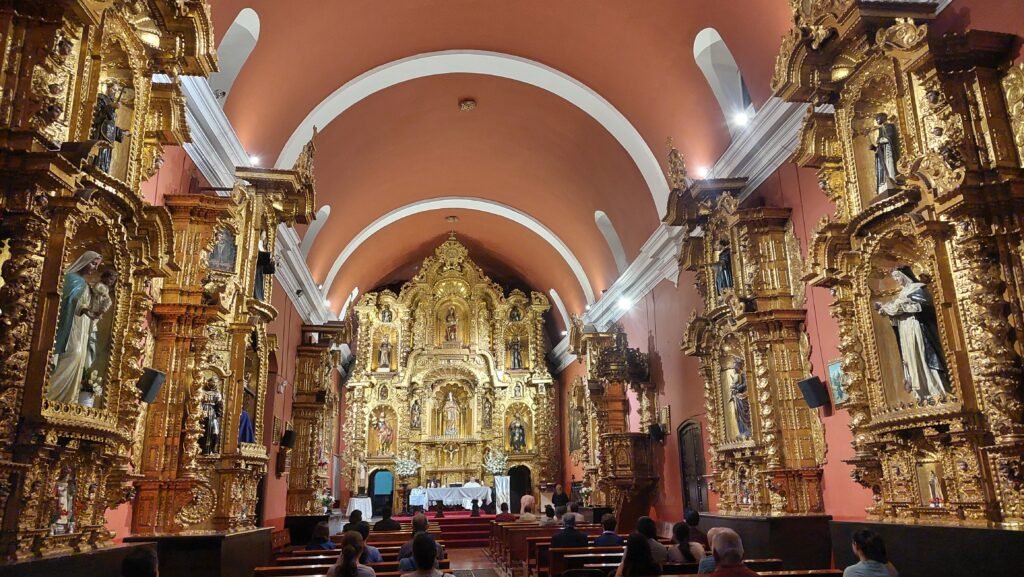
Our next stop is the Santa María Magdalena Church. Founded in 1557, this is the oldest and most beautiful rural church in Lima. While its pink facade is striking, the real wonder is the gold-leaf Baroque altars inside. It’s a peaceful moment of reflection on our tour and a testament to the deep religious roots of the district.
Antigua Taberna Santiago Queirolo
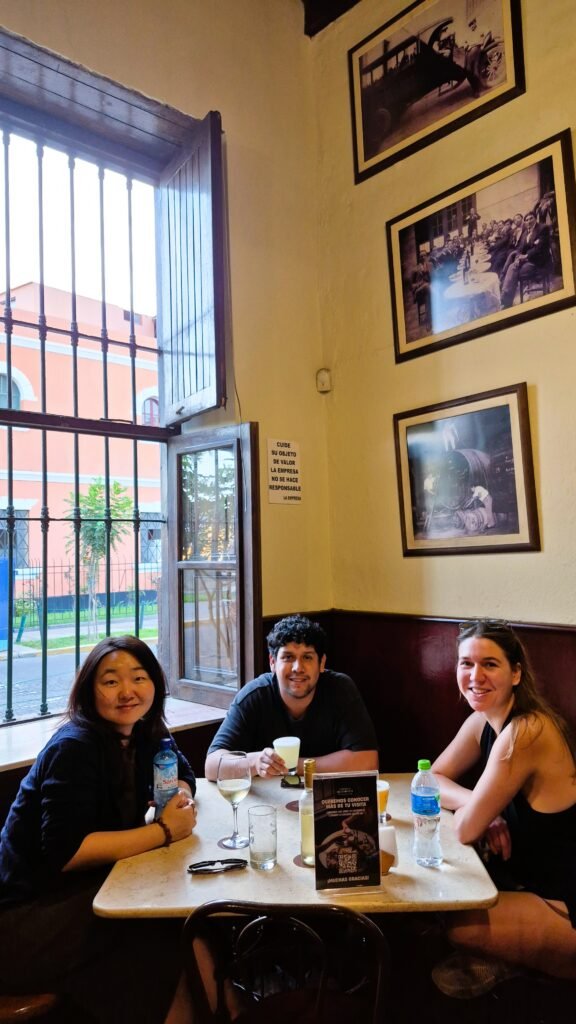
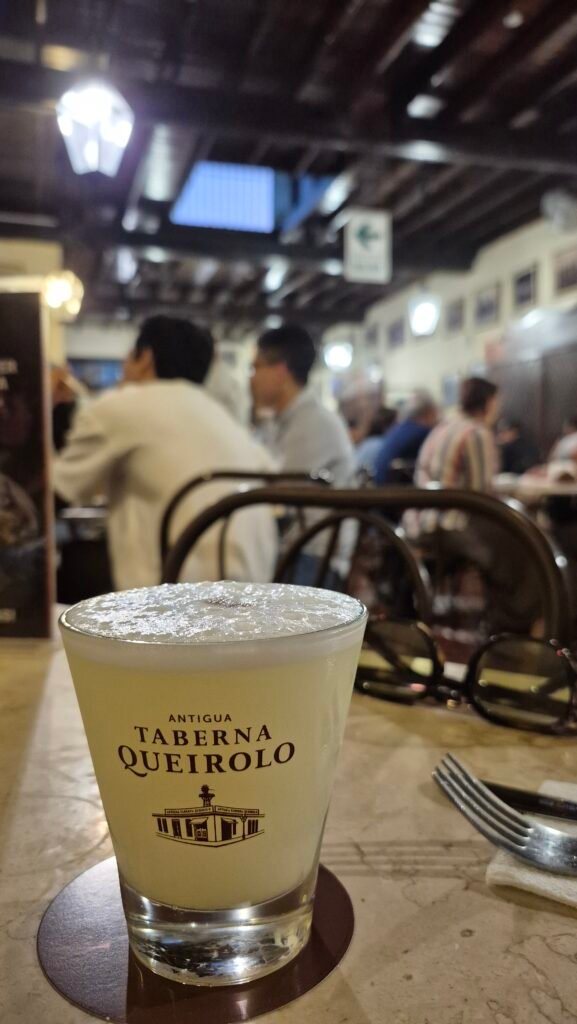
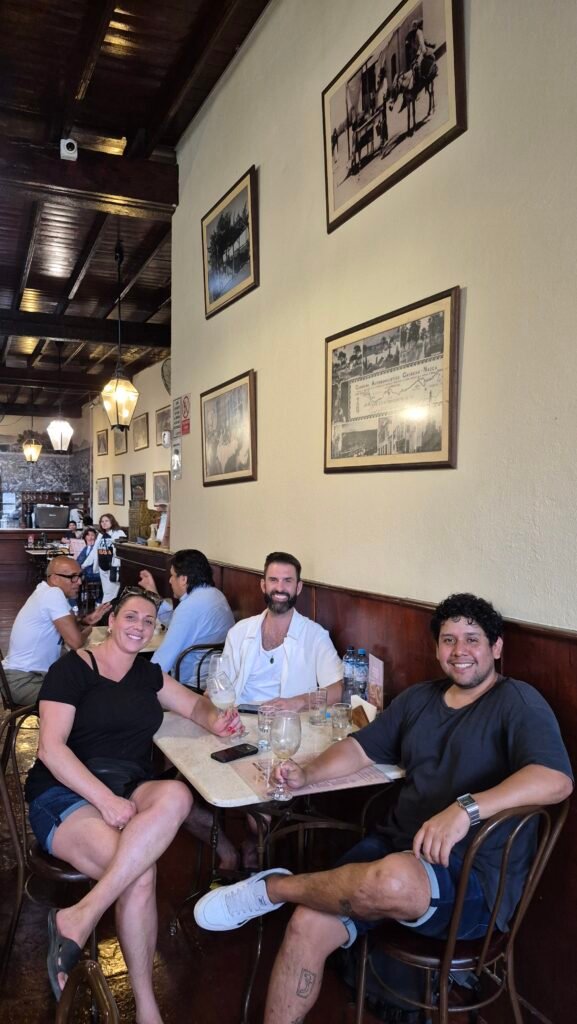
Just a short walk away is a Lima institution: the Antigua Taberna Santiago Queirolo. Founded in 1880 by Italian immigrants, this tavern started as a pulpería (a general store) for local farmers.
Today, it is the legendary home of Peruvian Pisco. The dark wood, marble tables, and vintage bottles create an atmosphere you can’t replicate. It’s the perfect place to imagine 19th-century Lima while breathing in the aroma of traditional sanguches (sandwiches) and traditional Peruvian food.
You can find my recommendations for this place at the end of this article (*)
Boulevard del Criollismo
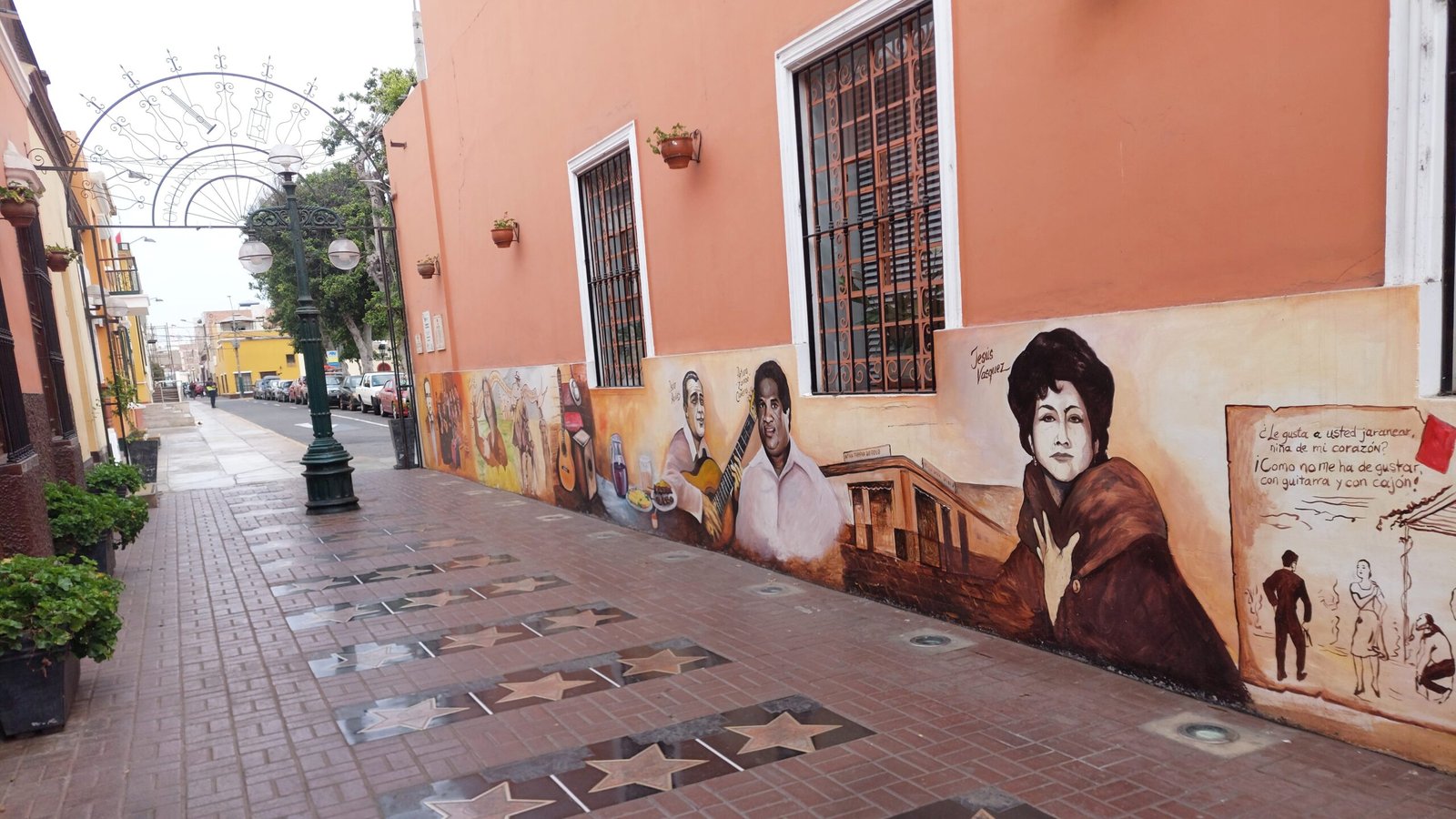
Before our final stop, we’ll stroll through the Boulevard del Criollismo. This pedestrian walkway celebrates Música Criolla—the soulful, rhythmic music that defines the Peruvian coast. Criollo culture is the heart of Lima’s identity—a blend of Spanish, African, and Indigenous influences expressed through music, dance, and food. This boulevard celebrates the guitarists and singers who made the Vals Criollo the soundtrack of our city.
To Finish Up, Our Beloved Museum
To wrap up our tour, we enter the National Museum of Archaeology, Anthropology and History of Peru. This is the oldest state museum in the country.
Inside these walls, we’ll see the progression of Peruvian civilisation—from the mysterious Chavín stone carvings to the intricate textiles of the Paracas and the imperial grandeur of the Incas. It is the perfect place to tie together everything we’ve seen on the streets: the history, the people, and the enduring spirit of Peru.
Join the Journey
Exploring Pueblo Libre is about more than just sightseeing; it’s about feeling the pulse of a neighbourhood that has stayed true to its roots. I lead this Free Walking Tour Pueblo Libre in English because I’m passionate about sharing the “real” Lima with travellers from all over the world. There is no fixed price to join—my main goal is to ensure you have an unforgettable experience. At the end of our walk, if you’ve enjoyed the stories and the flavours we’ve shared, any gesture of appreciation is entirely at your own discretion and always welcomed with a smile. I can’t wait to show you the magic of the Free Town!
*Recommendation for Queirolo
Since we’re stopping by the Antigua Taberna Santiago Queirolo, you absolutely have to eat like a true Limeño. This isn’t fine dining; it’s soul food served in a place that has seen over 140 years of history.
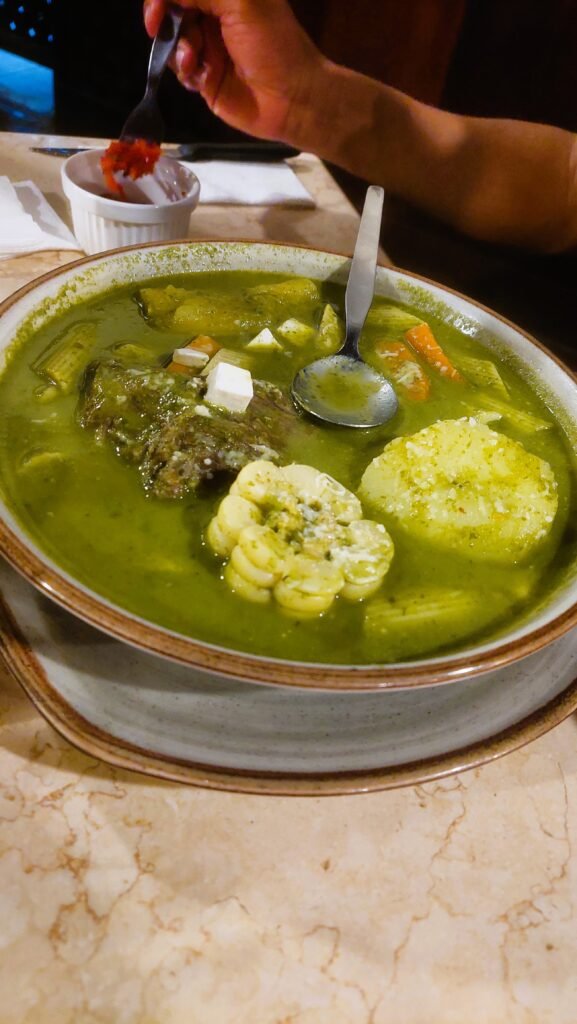
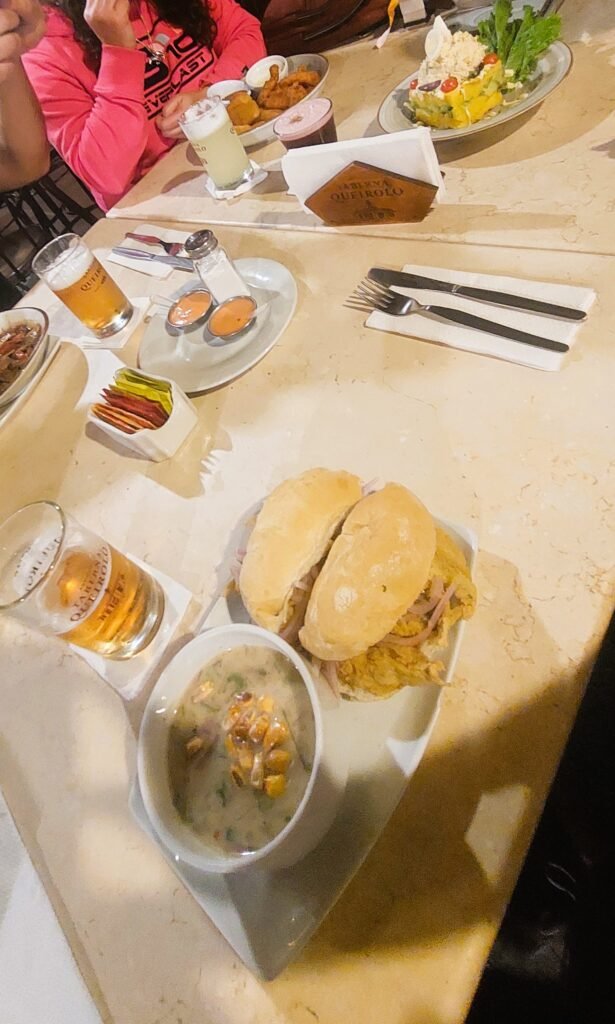
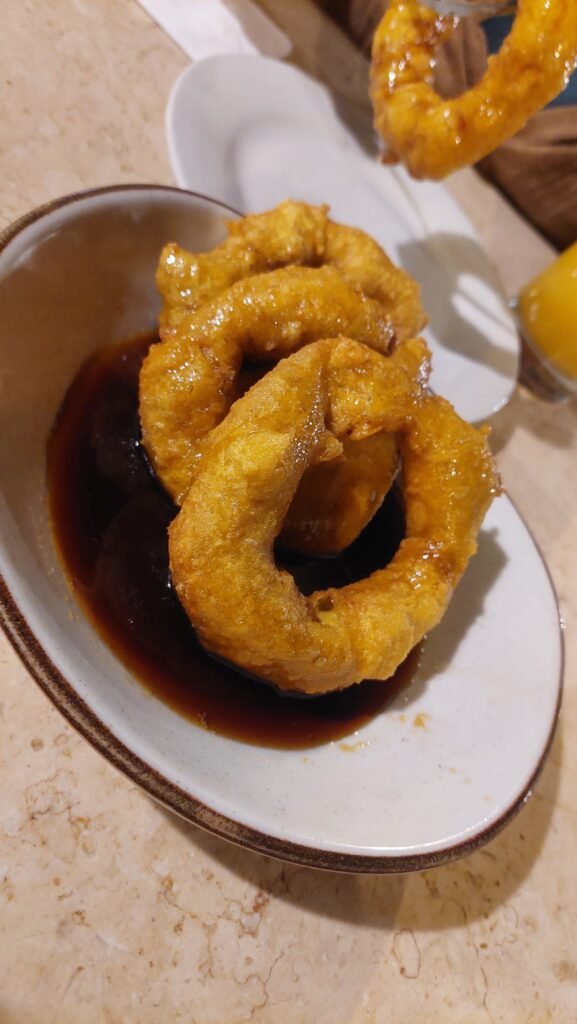
Here is my personal “shortlist” of what you should order to get the authentic tavern experience:
1. The Classic Butifarra (Sanguche de Jamón del País): Homemade “country ham” (pork seasoned with achiote, garlic, and cumin) served on a crusty French roll.
2. Causa de langostinos: Potato dough mixed with amarillo chilli paste and lime juice served with a layer of avocado and crumbed prawns.
3. Papa Rellena: This is one of the most beloved snacks in Peru, and Queirolo does a fantastic version. Is a large “football” of mashed potato stuffed with a savoury mix of minced beef, raisins, olives, and boiled egg, then deep-fried until golden and crispy.
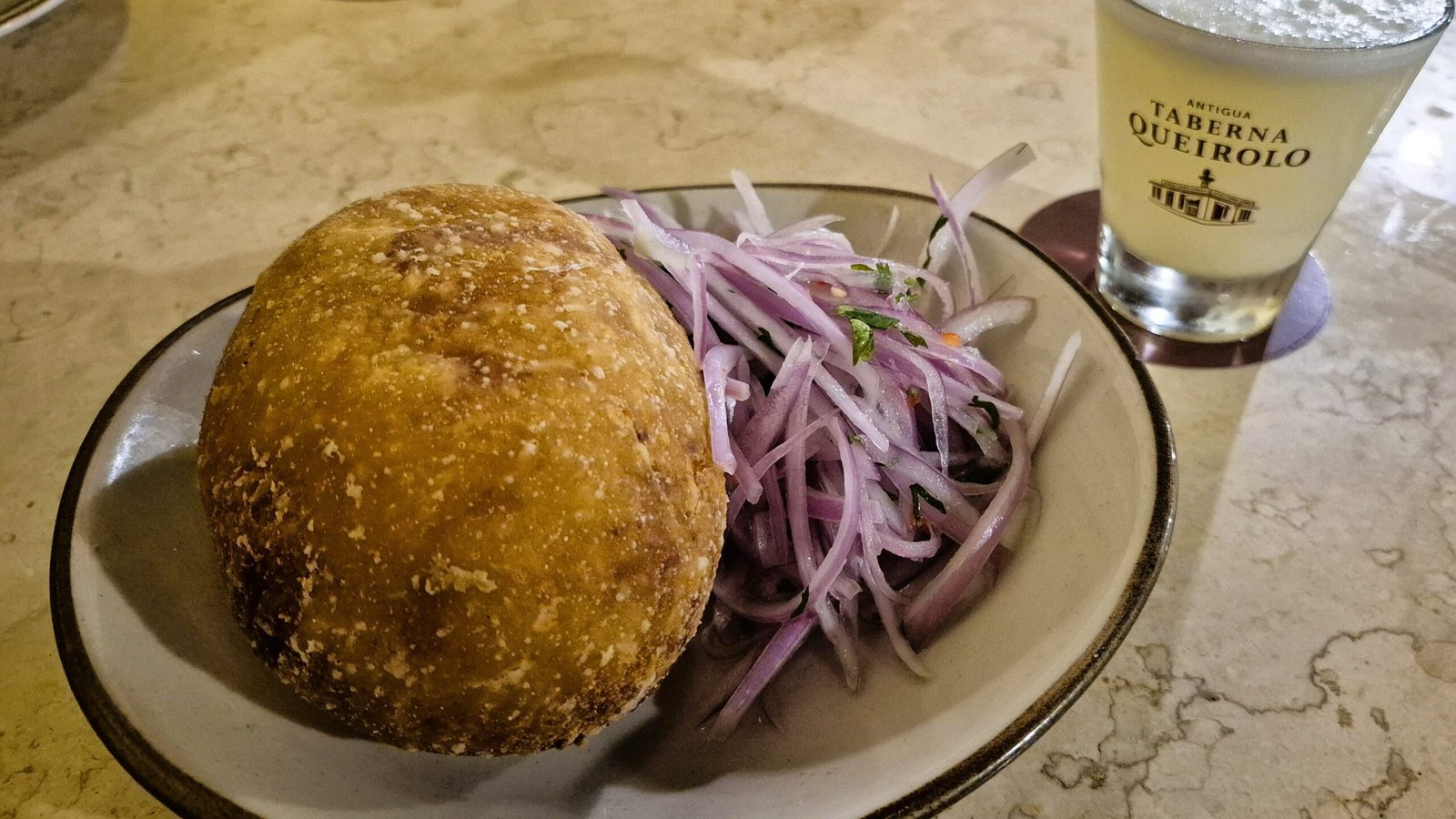
4. Sanguche de Chicharron: Juicy pork belly meat cooked with different spices and then deepfried on its own juices, which adds an extraordinary flavour to it. The pork is then served over a deepfried sweet potato wheels in a crunchy French roll and crowned with Sarza Criolla.
And to Drink? You Can’t Miss the “Res”
In this tavern, we don’t just order a cocktail; we order a Res de Pisco.
How it works: The waiter brings a full (or half) bottle of Queirolo Pisco to your table, along with a large bottle of ginger ale, ice, lime slices, and sugar syrup. Then you mix your own Chilcanos at the table. It’s the most traditional way to drink here, and it’s meant for sharing and long conversations.
Alternatively, they have a good selection of Pisco Sours, beers, cocktails, wines and non-alcoholic drinks!